The long version
The table above is the short answer. This is the longer one.
What a CS2 gambling site actually is
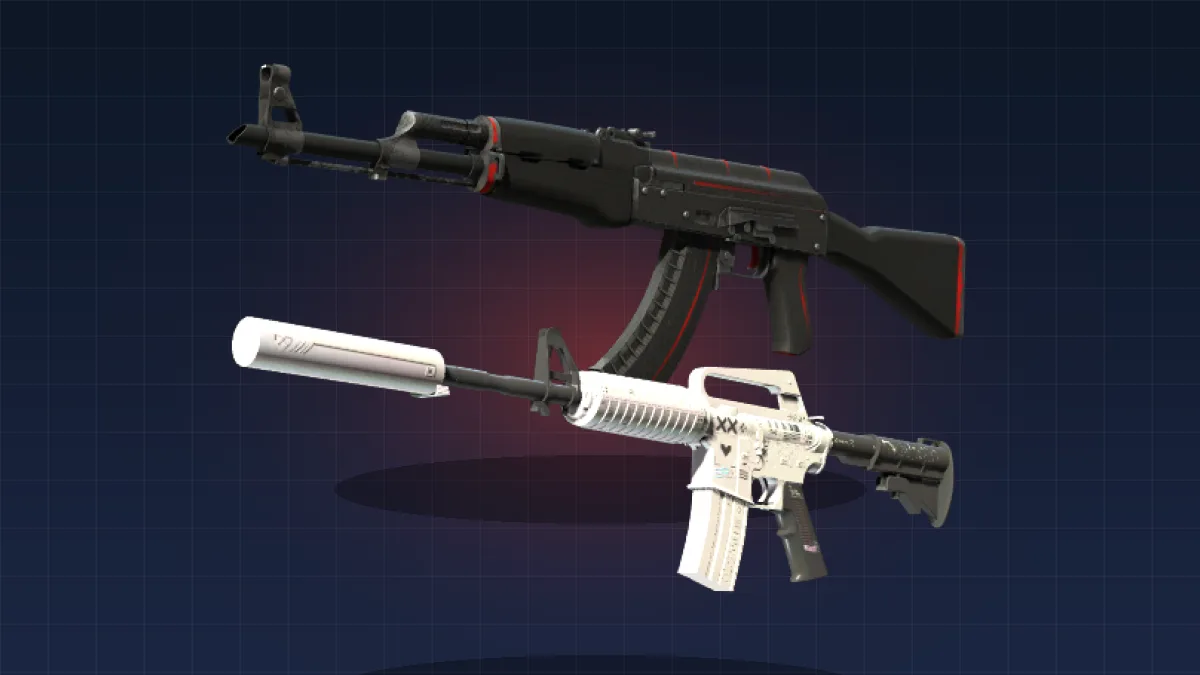
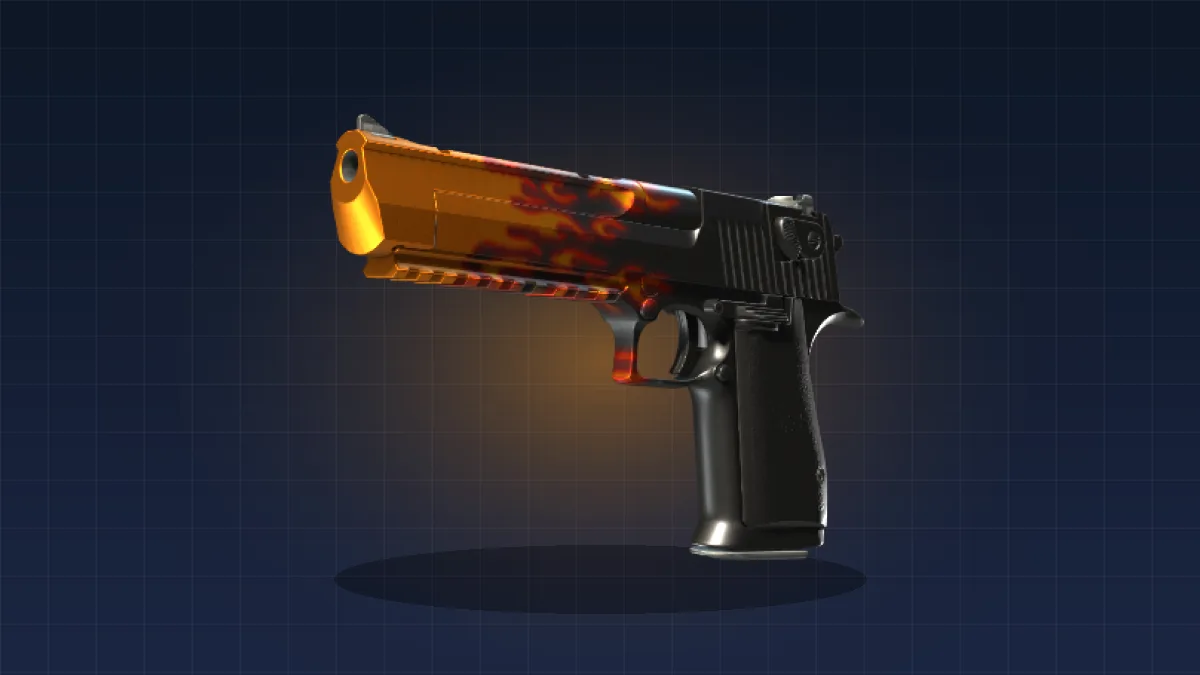
A CS2 gambling site is a third-party website where Counter-Strike skins, or crypto, are the stake. You deposit skins through a Steam trade or send coins from a wallet, the site turns that into an on-site balance, and you play it on cases, battles, crash and the rest. When you're done, you withdraw as skins or crypto.
None of these sites belong to Valve. Valve doesn't license or endorse them, and in 2016 it started sending cease-and-desist notices to skin gambling sites that relied on Steam's systems. That matters in one practical way: if something goes wrong, Steam Support won't step in. Your agreement is with the site and whoever runs it, which is why trust carries the most weight in our scores.
How this differs from opening cases in CS2
Opening a case in the game is the closest thing Valve offers, and it's worse value than most people assume. You buy a key from Valve ($2.49, give or take a little by region), buy the case on the Steam Community Market, and get one item based on odds Valve publishes:
| Rarity | Chance per case |
|---|
| Mil-Spec (blue) | 79.92% |
| Restricted (purple) | 15.98% |
| Classified (pink) | 3.20% |
| Covert (red) | 0.64% |
| Exceedingly Rare (knife or gloves) | 0.26% |
A 0.26% chance works out to one knife or pair of gloves per roughly 385 cases, on average. At $2.49 a key that's close to $960 in keys alone, before you've paid for a single case, and "on average" hides plenty of people who open 700 and never see gold. Sell what you unbox on the Market and Steam keeps 15% (5% Steam fee plus 10% CS2 fee). The rest lands in your Steam Wallet, which can't be withdrawn and caps out at $2,000.
Cases on gambling sites work differently. The site builds its own cases from real skins, sets the price (anything from a few cents to hundreds of dollars) and lists the odds for every item. Results come from a provably fair system you can check afterwards, and anything you hit can be sold back for balance in one click or withdrawn.
| What changes | Opening in CS2 | Opening on a gambling site |
|---|
| Cost per open | Key plus the case's Market price | Whatever the site sets |
| Odds | Fixed per rarity tier, published by Valve | Listed per item by the site |
| Checking a result | Not possible | Provably fair verification |
| Getting value out | Market sale, 15% fee, money stuck in Steam | Skins or crypto |
| Who's accountable | Valve | The site's operator |
The catch is the same as at any casino. The site prices each case above the expected value of what's inside, and that gap is its margin. On a decent site you can work it out from the listed odds. On a bad one the odds are vague or missing, which tells you plenty. Our CS2 case odds guide shows the math.
Game modes you'll run into
Cases are where most people start, but they're only one of the modes. The short version of each:
- Case opening. Pick a case, check the odds, open it. Simple, and the house edge is built into the price.
- Case battles. Two to four players open the same cases and the highest total takes everything. Good fun with friends, expensive when you're chasing.
- Upgrader. Stake a skin or some balance for a shot at a pricier item. The site shows the probability, and a 2x target usually sits a little under 50%.
- Crash. A multiplier climbs until it crashes, and you need to cash out before it does. There's no pattern to read, whatever the chat says.
- Roulette. Most versions have two sides paying 2x and one rare slot paying 14x. CSGOEmpire built its name on this one.
- Coinflip. You against another player at 50/50, with the site taking a fee from the pot.
- Jackpot. Everyone throws skins into one pot, and your chance of winning matches your share of it.
- Plinko, mines and dice. Casino-style originals with adjustable risk. Rounds take seconds, which is exactly why they empty balances so quickly.
SkinRave and CSGOFast carry the longest game lists in our table, but neither scores near the top. Clash.gg and CSGORoll cover most of the modes above on sites we trust a lot more.
How we pick and rank the sites
Every site in the table gets a real account from us. We deposit, claim the welcome offer, play the main modes, verify a few rounds on the provably fair page, ask support awkward questions, and withdraw in both skins and crypto. Then we score it on six criteria:
- Trust and safety, 28%
- Payout speed, 18%
- Bonus and value, 16%
- Game variety, 14%
- User experience, 12%
- Support, 12%
Trust and payouts make up 46% of the score between them, on purpose. Fifteen game modes and a big bonus are worth nothing if your withdrawal sits in "pending" for a week. The full method is on our how we rate page.
Every site is re-checked at least once a quarter, and scores go down as well as up. We earn commissions from these sites, but that doesn't buy a better position, and our affiliate disclosure explains how the money works.
All 18 sites restrict players from the United States and the United Kingdom. If you're in either country, don't try a VPN. Sites that catch it tend to close the account, and their terms usually let them void the balance.
Red flags we walk away from
Most people who lose skins to a CS2 site don't lose them at the tables. They lose them to a fake login page.
The Steam API key scam is the big one. A phishing site shows a convincing Steam sign-in pop-up, you type your details, and the scammer quietly creates a Steam Web API key on your account. With it they can watch and cancel your trade offers, then send a look-alike offer from a bot posing as the real site. You accept, and your skins go to a stranger.
Check steamcommunity.com/dev/apikey now. If there's a key you didn't create, revoke it, change your Steam password, deauthorize all other devices and make sure the Steam Guard Mobile Authenticator is on. Our API key scam guide covers the full cleanup.
Beyond phishing, these are the things that keep a site out of our table:
- A Steam login that opens in a pop-up you can't move or inspect, or that sits on any domain other than steamcommunity.com.
- No provably fair page, or one that doesn't show you the hashed server seed before you play. Here's how the check is supposed to work.
- Withdrawals stuck in "pending" for days with no explanation, or ID checks that only appear after a big win.
- Bonus terms you can't find until you've deposited.
- Enormous no-deposit offers from a site that launched last month.
- Anyone messaging you on Steam claiming to be site staff, a giveaway admin or a "verification" bot. Real sites don't do that.
Setup before your first deposit
Turn on the Steam Guard Mobile Authenticator if it isn't already. Without it your trades go on hold for days and P2P deposits tend to fail. Find your trade URL (our trade URL guide shows where) and paste it only into the site you actually signed up on. Use two-factor login on the gambling site too.
Then do what we do with every new site: deposit a small amount, play a little, and withdraw before putting in anything you'd miss.
Deposits and withdrawals in practice
You'll mostly be choosing between skins and crypto. Sixteen of our 18 sites also take card deposits, but none pay out to a card.
Skins
Skin deposits come in two flavors. On bot-based sites you trade the skin to the site's bot. On P2P sites (CSGOEmpire is the best-known example) another user buys your listed skin and you send it to them directly, with the site holding the money in the middle. P2P usually pays better but means waiting for a buyer. Our P2P vs bot deposits guide compares the two properly.
Valve's Trade Protection, introduced in mid-2025, complicated this. For seven days after a trade, the original owner can reverse it, so a P2P seller could in theory take the buyer's money and pull the skin back. Some sites now hold the seller's funds until the window closes; others credit you straight away with conditions attached. The deposit screen should say which. If it doesn't, ask support before you trade.
Withdrawn skins carry a 7-day trade cooldown, like anything bought on the Market or received in a trade, and on P2P sites a withdrawal only completes once a seller sends it. When that stalls, a good site lets you cancel and pick something else.
Crypto
Crypto is the fastest way in and out on nearly every site we test, and approved withdrawals typically arrive within minutes. Stablecoins like USDT and USDC spare you price swings, and cheaper networks (Tron, Solana, Litecoin) stop fees eating small amounts. Send on the wrong network and the coins may be gone for good, so check twice. The crypto deposits guide walks through it.
Cards and Steam Wallet
Card deposits often run through a third-party processor with a fee on top. Fine for a first deposit, expensive as a habit. Steam Wallet money can't be spent on these sites and can't leave Steam at all, which is why people sell skins to sites rather than on the Market when they want money out.
Bonuses, and what the free cases are really worth
Welcome offers come as free cases, a little free balance, or a percentage on top of your first deposit, and the headline figure is usually the least useful part. Free cases are mostly low-value boxes with a slim chance at something nice. "Up to $1,000" means one item inside is worth that much, not that you'll get anywhere close. Treat them as a free look at the site.
Deposit bonuses need more thought, because they nearly always come with wagering. Say you deposit $20 and get a 100% match, so $20 extra, with 10x wagering on the bonus. You'd need to bet $200 before it can be withdrawn. If your games carry a 5% house edge, you'd expect to lose about $10 along the way, so the bonus is worth around $10 on average, not $20. Still positive, just half what the banner suggests. Our wagering requirements guide has more worked examples.
If you play regularly, rakeback and daily cases end up worth more than any welcome offer. Watch for free perks behind an ID check: Clash.gg, for one, wants KYC before you can use its rain and faucet. To get the current offers, enter code CSGOCORN at sign-up or register through our links. The bonus codes page lists what each site gives right now.
Keeping it a hobby
You need to be 18 or older to use any site in our table, older in some countries. Past that, the best protection is deciding your limits before you deposit, not after a bad battle.
Skins make this harder than it sounds. A coin balance doesn't feel like money, and a skin you've owned for three years feels like part of your loadout rather than $300. Both are real money. Set a monthly budget and keep it apart from your inventory. Never deposit to win back a loss. Cash out some of your wins instead of rolling everything into the next case. And if you catch yourself selling skins you actually like to fund deposits, stop there.
Ask a site's support about deposit limits or self-exclusion before you need them. How they handle the question tells you a lot. Our responsible gambling page covers blocking tools and lists free help by country.